When it comes to writing in our new language it is often pushed to one side, we try and convince ourselves that writing is easy; “we can do it in our language, so there is no point focusing on it.“
The problem is that writing in a new language is not easy and is in fact quite difficult. Writing is a form of output, so you have to actually produce the language yourself. This means you need to actually have a good knowledge of the language and how it works, so that you can produce it yourself.
While the act of moving a pen around a page is easy, knowing what to actually write is the problem and this is what we find difficult and the only way to overcome this to just progress with our studies.
(You can read more about – What Is The Hardest Part Of Learning A Language?)
Page Contents
We Do Not Really Use Pens Today
For a large number of us, we do not really use pens anymore. I certainly hand write very infrequently. I do always have a pen and paper nearby, but the vast majority of my writing is now done digitally.
This lack of writing can really make it seem a little strange if we start writing in a new language. We are sort of rusty at writing, then when you add the fact that we are not very strong in the new language, it can just feel difficult.
This feeling will of course go away with practice, but many people give up pretty quickly as they just don’t like how difficult it feels.

Your Native Language Gets In The Way
While we may not write too often these days and feel rusty, we will have written a whole lot in the past. If you think back to school you have probably written hundreds of thousand words in your life.
This can cause a bit of a problem when you try and write in a second language, basically your native language gets in the way and you may find you hand suffers from muscle memory and you sort of end up writing things you didn’t mean to, basically in a sort of auto pilot.
I am making this sound more dramatic than it is, but in reality it is going to be more subtle and is usually going to be a problem for words that are similar in both languages.
I always use the example of passeport in French. If I am writing I will often miss the e out, and sometimes that is due to my hand being on autopilot and by the time I’ve realised, it’s too late and already written the English version.
Keyboards Can Be Different
Typing is also a form of writing and this can be difficult in a language too. It can be difficult for two reasons.
The first being very similar to the above point, your native language can sort of get in the way. A lot of us can type automatically. Basically if you can type without looking at the keyboard you have mastered typing.
If you can do this, you may find that you accidently type the English version of a word, rather than in the language you are trying to write in.
However, the second and bigger issue is if the language uses a different keyboard as this can totally through you off. I’m not sure if this is a problem with all languages, but I know there is a “French keyboard” and it causes me so much trouble.
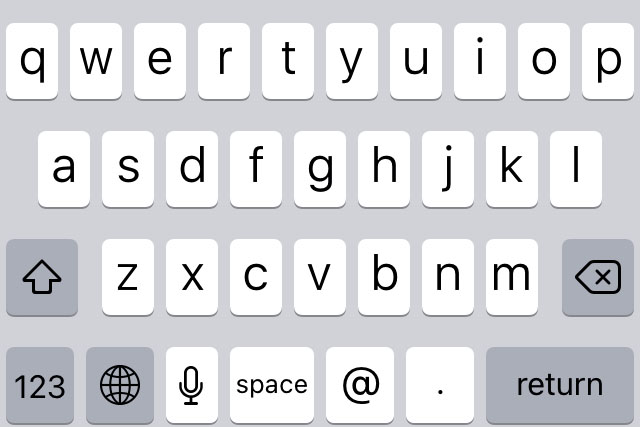
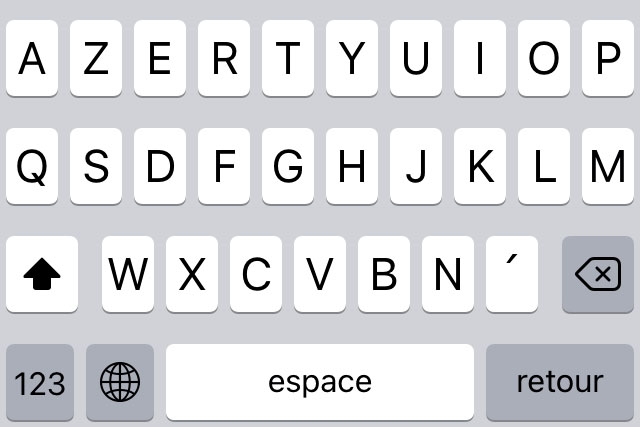
If you look at the pictures above you will see the top left letters A and Q have switched places, as well as a few others. This may seem minor, but when your fingers are used to a certain letter being in a certain place, it does not end well.
Every single word I type on this french keyboard is wrong. In my head I’m tying A …but Q appears on the screen. This little change makes typing extremely difficult and very time consuming. I basically have to look at the keyboard and find each letter I want to type, it’s not very efficient.
The good news is that if I go back to the English style keyboard, I can write in French quickly and correctly, so really this is the way around the problem.
Grammar Is Difficult
In a new language everything will involve some sort of grammar, and until we are really comfortable with the language then this is going to be difficult, which means writing is going to be hard.
Writing makes you recall what you know and makes you produce the language yourself, which can easily go wrong when you are still learning. This is made harder by the fact that writing needs to be perfect. If you make mistake it will be there in black and white for all to see.
Spelling and Punctuation
Spelling and punctuation is pretty straight forward in our own language, there may be a few things we are not comfortable with, but overall we are fine, this is usually the opposite in a language we are learning.
We probably know how to say the words, but we may not know exactly how they are spelt and just not be fully comfortable with the order of the letters which means mistakes can easily happen. When you add accents or silent letters on to this as well, it can suddenly seem even harder.
The same can be true for punctuation, it may just be slightly different in the new language and we are just either not aware or as comfortable as we should be so we try and rely on our understanding of English punctuation, which may be wrong.
(You can read more about – How Does Writing In A Second Language Differ From Writing In Your Native Language?)
Knowledge Gaps Make Writing Difficult
On of the biggest problems you will face is that you just don’t know enough words. You may want to say something, but just have no idea how to actually express it in the language. This is extremely frustrating and is certainly an issue beginners will face.
They may want to write, but just not know enough to begin. The only way around this is to start learning more words and filling the gaps.
You don’t need to start writing by producing a 500 word essay on a topic, you could start with single words and then try and build up your sentences from there.
Keeping things very simple and doing something is much better than doing nothing at all.
(You can read more about – Frequently Asked Questions About – Writing In Your New Language)
You Need To Use Your Memory
Writing can also be difficult as you need to remember what you know. You need to try and actively recall a word and this can be tricky if you do not know it that well.
The good thing is that there is no time limit when you are writing. You can spend as much time as you need trying to remember words or grammar structure. It is not like speaking where you need to respond right away; you can go much more slowly when writing, which can take a lot of the pressure off.
(You can read more about – Memory Tricks For Language Learning)
You Haven’t Practiced Enough
This may sound silly, but it’s true. Writing in a new language is hard because you have not practiced it enough. While it may seem extremely similar to writing in your own language, it is different enough that it becomes a challenge.
This does make the problem pretty easy to fix …just do more practice. The more you do, the easier things will get.
(You can read more about – How To Overcome The Fear Of Writing In A New Language)
You Don’t Know What To Write
Writing can also just be difficult because you don’t know what to write. You may know that you need to practice, but what do you actually write.
If you are having this problem, you need to get some resources to help you along, or at the very least have some purpose that gets you writing. This will usually be in the form of a friend, such as emailing them or having a language exchange.
Having someone to write to is good for two reason, they will be asking you questions and telling you things, which will give you prompts for what you should right about, but they can also correct your work, so long as they are a native speaker.
Simply having a friend in the language is going to make sure you have something to write about and make things a lot easier for you.
(You can read more about – Writing Resources For Language Learning)
You Can Only Write As Well As You Can In Your Native Language
I think it is also important to note that writing can be difficult as you can really only ever write as well in a second language as you can in your first.
Basically your ability to write is determined by you, not your language skills. You can’t learn a second language and suddenly become a world famous author. Even if you where fluent in both languages, your writing skills would be equal in both.
However, this is more for professional writing. If you are just writing down your shopping list or speaking with friends, then you are going to be able to do this in both languages equally as well too, so long as you know all the words, so it’s not really something we need to worry about, but it is still interesting to mention.
Conclusion
As you can see there are many different things that make writing in a second language difficult. We will all face one of these problems, if not many of them together.
However, they are all problems we can overcome. We just need to practice more and we will find writing easier. Writing is just a skill and we can train it and it is wise to do so as it can make our language skills stronger overall.
(You can read more about – How To Improve Your Writing Skills In A Foreign Language)

Ian is the owner and main writer of Reaching Fluency. He is a native English speaker, French speaker and Japanese learner and general lover of language learning.
You can read more about him on his Authors Page or link with him on social media
日常英会話メール
ニュースレターを購読してください! - 参加無料
メールリストに参加すると、少なくとも週に 1 回 (場合によってはそれ以上) メールが届きます
メールは毎日の英会話で、読んで勉強することができます。
メールは短いですが役に立ちます。いつでも停止できます