
Today we are looking at another important sentence particle in Japanese, the object particle. There is maybe a little more to go through here than some of the other ones, so let’s get in to it.
を Isn’t Pronounced Wo
I am sure you recognise the hiragana letter を …wo.
However, when it is used as a the Object Particle in sentences … it’s just pronounced “o”
It’s annoying, but that’s just how it works. It’s exactly like howは (ha) is pronounced Wa when it’s used as a particle.
It’s just one of those small quirks, but you will get used to it fast. I probably will still write “wo” after it here, but just remember, when it’s being used as a marker you say “o”
The Object Particle in Japanese – を (wo)
Now we know how to say を …lets look at what it does.
the を(wo) partcile marks the person or thing (the object) that is receiving the action of the verb.
This can all sounds a little wordy, but basically whatever comes before “を” is the thing that the action was done to.
lets look at an example: パンを食べます(pan wo tabemasu)
This means “eats bread” …but you have to see it more as “the bread receives the eating”.
As I just said, whatever comes before the をis the “object”… which in this example here is bread …and it has the action done to it. The action here (or verb) is eating.
So the bread has the eating done to it.
Sounds weird, but hopefully you get the idea of the concept.
In English we do this with word order, rather than using particles. Whatever comes after the verb, is the thing that gets the action done to it. In the example above, in English, we have eats, which is the verb and the bread comes after, which tells us that this is the object that had that action done to it.
Just think of any sentence like this: “Kicks …the ball”. Or you could have “Reads …the book”. We can see what the object and verb are and how they relate.
We are use to that in English, so now we just need to train our new Japanese eyes to understand that the action always happens to whatever comes before the を particle.
I think we can get confused at times as it can be more than just one word that we see before the particle and it can often be a whole string of stuff …but that is fine. Just remember the を marks everything before.
Even if there is a lot, it should still make sense in context. Whatever comes before should make sense in relation to being an object …that the action (the verb) that comes after can do to it.
You have probably already noticed that Japanese sentences usually end in a verb, and just before this, is the を. Hopefully now you can start to see that everything before this is “the object” that the verb is relating to.
を and が (ga)
You are going to comes across some sentences that don’t really follow what I have discusses above. Basically some sentences will not have an object that can “receive the action” and this can throw you off.
In these cases, you may see がinstead ofを.
田中はパンを食べた (Tanaka wa pan o tabeta) – Tanaka ate bread
田中が食べた (Tanaka ga tabeta) – Tanaka ate
In the second sentence, we can see there is the verb “ate” … but it is not stated what was ate. There is no object. We know Tanaka did it, but there is no object.
This will of course be implied and I could go into the whole world of zero pronouns like the zero が(ga) I have talked about before. Basically the object he ate is there linguistically, it’s just that we cant see it in this sentence.
This is just something to watch out for as you might be trying to work out how there can be a verb in a sentence, but no を.
The Difference Between に (ni), で (de) and を (wo)
You might be wondering why you might see some verbs not being marked with を (wo) and instead the particles に (ni) で (de) are used instead.
Really this comes down to the verb being used and the general context. It can get a little confusing, but hopefully with some examples it will be a little clearer.
に (ni)
に (ni) marks the destination, so would be used with any verbs where there is movement towards a place is implied, or that you are existing in that place, so if you are “in” or “at” a place.
“go to the shop” – 店に行く (mise ni iku) – you are moving to a location – the shop is destination. so ist に(ni).
The same is true for “to be at the shop” – 店にいる (mise ni iru) – you are existing at the shop, so に(ni) is used again.
If we tried to use を here it would make no sense, we would be saying “the shop receives the action of going” or “the shop receives the action of existing” …so that is just gibberish and why it has to be に.
で (de)
で (de) marks where an action takes place. The action is happening at the place.
“Singing at the shop” – 店で歌う (mise de utau) – The action of singing is happening at the shop, so で(de) is used. You have to see this as the shop is being used to utilise the action of singing.
Using を here would be like saying the shop is singing, kind of thing, like the actual bricks of the shop. I don’t know, it just doesn’t make sense, and you would need to use で (de).
(Return To: The Full List of All The Japanese Lessons)
Today’s Vocabulary
アパート– Apartment
町 (まち) – Town
番号 (ばんごう) – Number
玄関 (げんかん) – Entrance/ Front Door
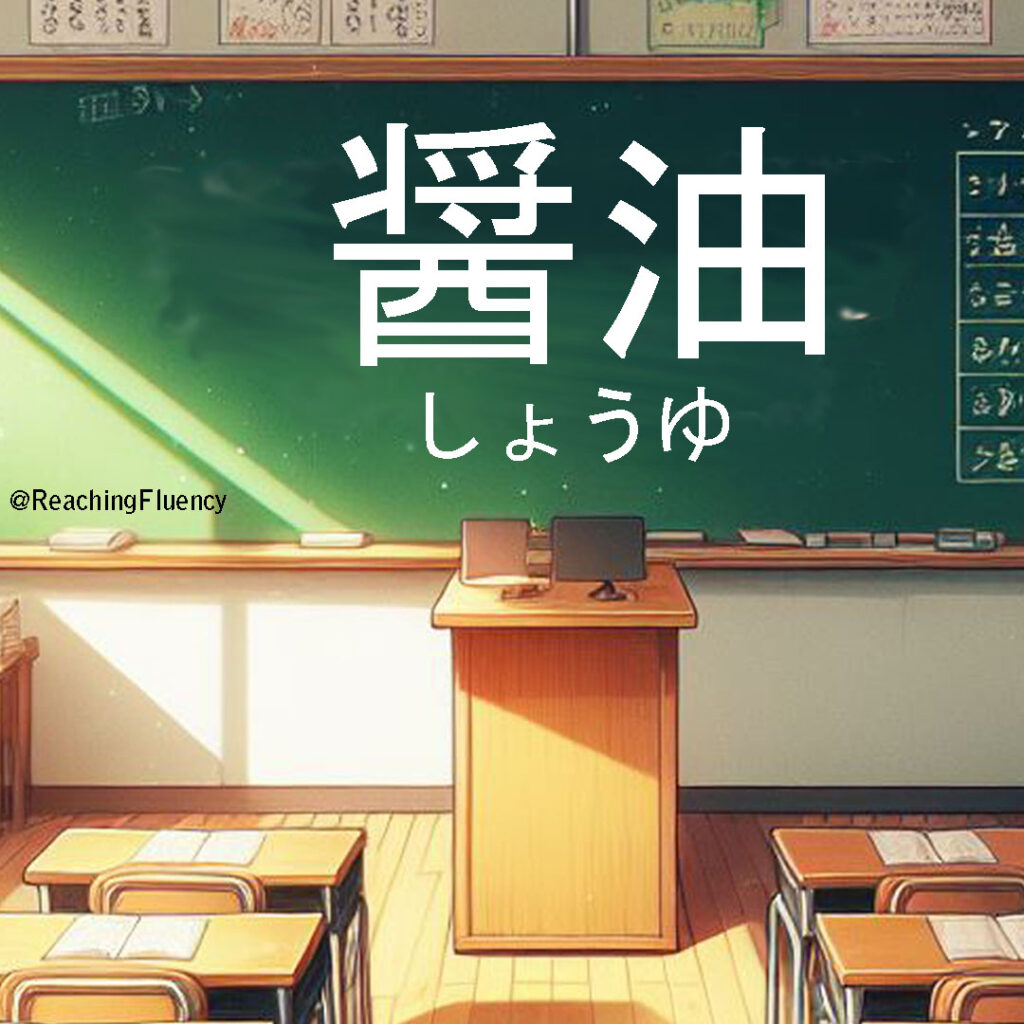
醤油 (しょうゆ) – Soy Sauce
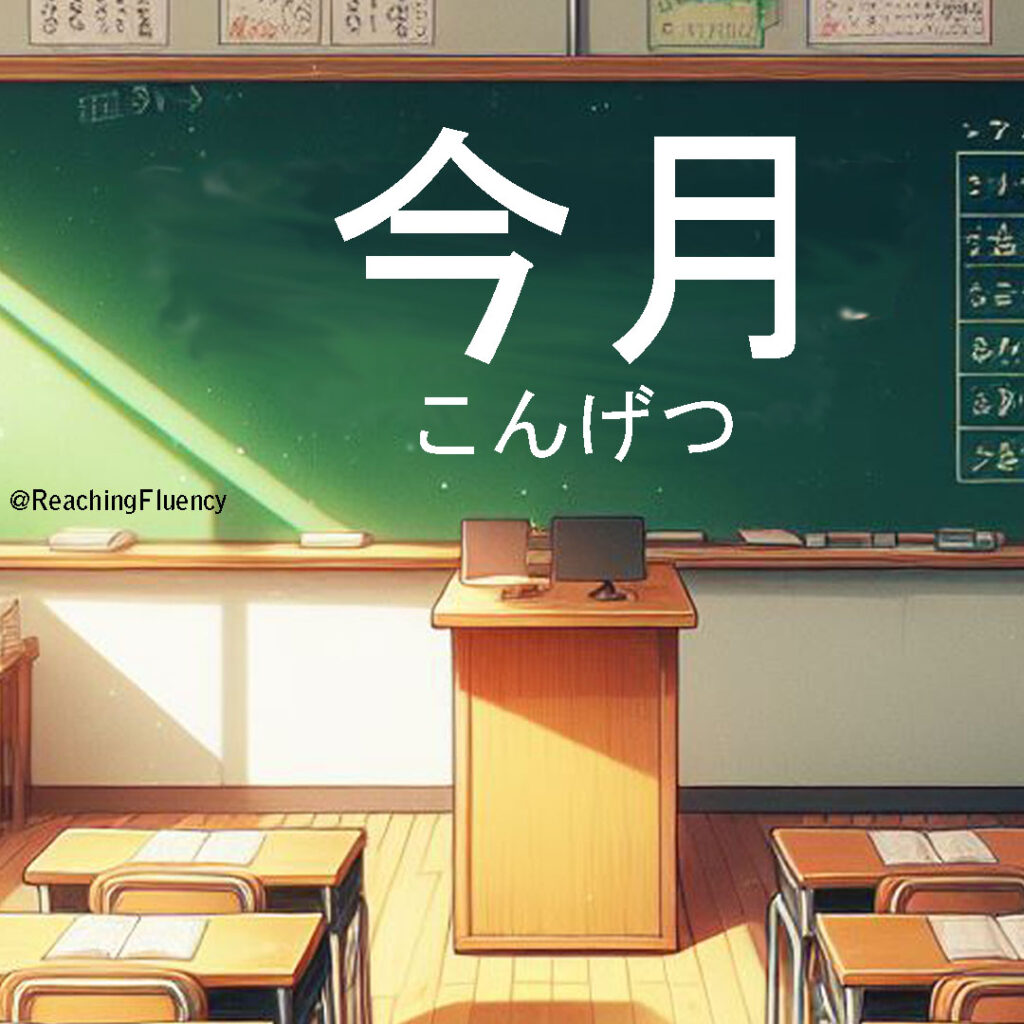
今月 (こんげつ) – This Month
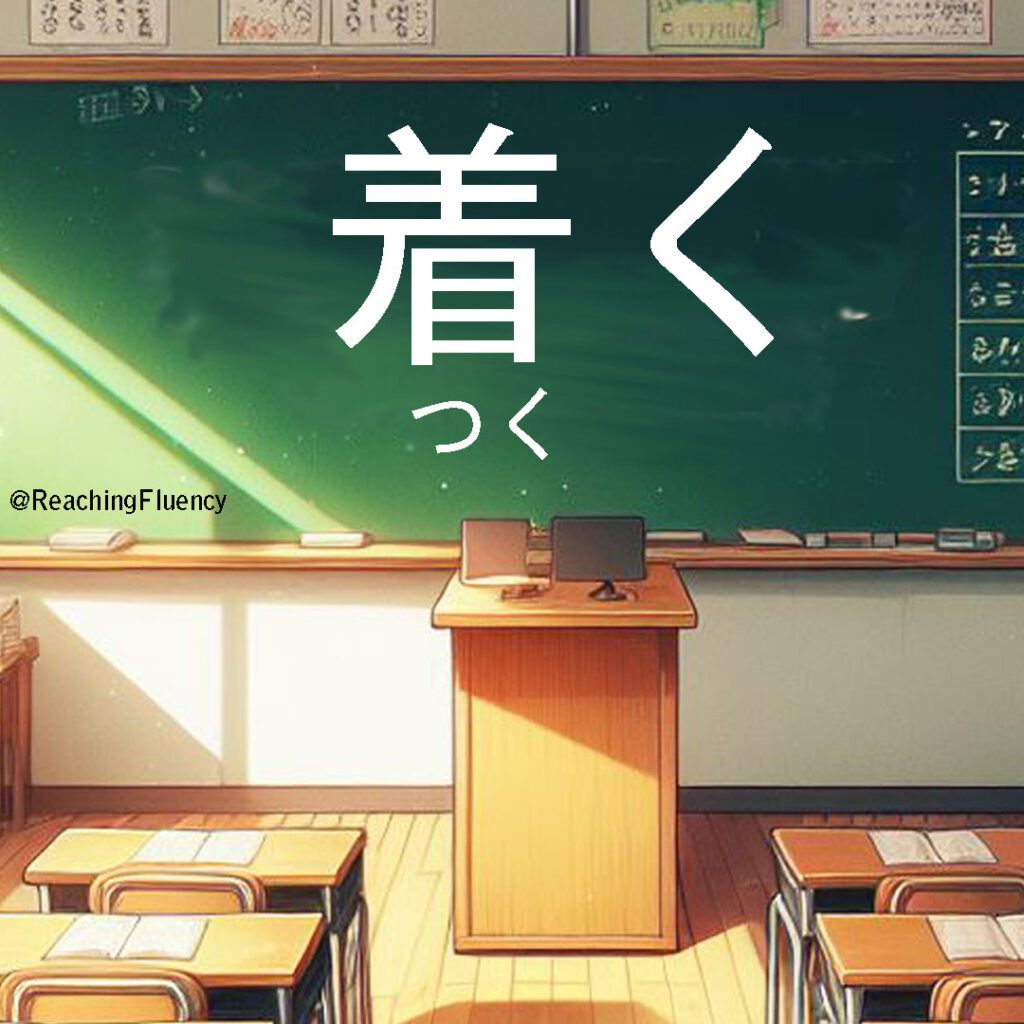
着く (つく) – To Arrive
Today’s Immersion Videos
It is taking me time to find/add more immersion videos. This section will be updated shortly!
Go To The Next Lesson: Day 23 – Telling The Time

Ian is the owner and main writer of Reaching Fluency. He is a native English speaker, French speaker and Japanese learner and general lover of language learning.
You can read more about him on his Authors Page or link with him on social media
日常英会話メール
ニュースレターを購読してください! - 参加無料
メールリストに参加すると、少なくとも週に 1 回 (場合によってはそれ以上) メールが届きます
メールは毎日の英会話で、読んで勉強することができます。
メールは短いですが役に立ちます。いつでも停止できます


Pingback: Japanese Day 21 - Counting and Numbers In Japanese - Reaching Fluency