
Today is going to be a big lesson, we will be looking at verbs and how they work, which means I need to throw a lot of information at you.
This is going to get intense, but just take your time and go through everything as many times you need and hopefully some concepts click and you can walk away with a better understanding of verbs compared to what most learners will ever reach.
I’ve tried to make this as simple as possible, but there is a lot here, so lets get into it.
Page Contents
Japanese Verbs
As with all languages, verbs are important …and usually upset people. When we think of all the annoying rules we have to understand and learn, most of these revolve around verbs and their many conjugations.
The truth is that there is some of this in Japanese too, but really it’s not that bad. You will find that a lot of the information around Japanese verbs is taught in smaller chunks so it can be hard to link everything together and then this is made even worse by the fact that Japanese grammar is often shoehorned into a more European framework, so that we can “understand it” and relate to it, but really it just makes things more confusing.
There is going to be a lot of information here, but really, in the grand scheme of things, it’s not that much and I think just going through everything here will help you a lot more.
What I am going to cover is usually how the Japanese learn their own grammar …and what did I say to you early on? …you need to think in Japanese, not English. So covering verbs in this way will help you in the long run.
How Do Japanese Verbs Work?
Verbs are words that describe an action and you where probably told in school they were “doing words”, which makes sense, anything you do is a verb – walking, eating, thinking, reading and so on.
However, the verb by itself is only half the solution. If we look at how things work in English, it will help us understand what happens in Japanese.
If you think about the verb “to walk” in English, we can use this in a variety of contexts, we don’t just say “to walk” as this would be considered the dictionary definition and while it can be used …we say things like walked, walking, will walk. These small changes alter the meaning of the word and even change when it might have been done, such as in the past tense.
This is usually called conjugation and really that just means we alter the verb to fit our needs. This also happens in Japanese. Some people say it’s not conjugation, and to be honest, it doesn’t matter what it’s called. All you need to know is that you can alter the verbs and you will get a slightly different meaning.
There are a few rules you need to follow to make this happen, but we will go through them below.
There Are 3 Types Of Verbs In Japanese
Before we look at the rules for altering the verbs, we need to understand that there are 3 different types.
This sounds more complex than it is, but really we just need to identify what type of verb you are looking at, so that you can make sure to apply the right set of rules to it.
I have also been sneaky and made you learn each type of verb over the last 2 weeks. If you have been following my vocabulary, you will recognise the verbs I give as examples below …so that might explain why I picked some seemingly obscure words to learn in your first few days.
The Dictionary Form Of Verbs
I think it is also important to note that while verbs can be found in all sorts of different forms, we will mostly be talking about the dictionary form here. It is this version that is the simplest form and it is the version that you apply the rules to get the different version you need.
Just think of English. The dictionary form is “to walk” … you then take this and add the rules to it to alter it to what you need.
Japanese is the same, and the 3 verb types I will talk about below are the verbs in the basic dictionary form.
You should have also seen the hiragana letter chart when learning these characters, and this is actually important here, for both identifying what verb type you have, and then what to do with it to make changes.
Of course you should have learned it in hiragana, and while it is better to only use that …I will use a lot of romanaji here today to make things a little easier, as then you can focus on what is going on and not trying to translate the letters.
Hiragana chart:
| K | S | T | N | H | M | Y | R | W | |
| A | Ka | Sa | Ta | Na | Ha | Ma | Ya | Ra | Wa |
| I | Ki | Si | Chi | Ni | Hi | Mi | Ri | ||
| U | Ku | Su | Tsu | Nu | Hu | Mu | Yu | Ru | n |
| E | Ke | Se | Te | Ne | He | Me | Re | ||
| O | ko | so | to | no | ho | mo | yo | ro | 0 |
Ichidan Verbs
The first type of verb will find in Japanese is the icihidan verbs, which are often taught as the iru/eru ending verbs and in most cases this is true.
You will need to look at the last two sounds of the verb, of course the final one is going to be RU, but the sound before is important to.
As the name suggest, they will end in IRU or ERU, which really means they are always going to end with something from;
The I row (ri, mi, hi, ni, chi, ki, i)
or
The E ending rows (re, me, he, ne, te, se, ke, e)
| K | S | T | N | H | M | Y | R | W | |
| A | Ka | Sa | Ta | Na | Ha | Ma | Ya | Ra | Wa |
| I | Ki | Si | Chi | Ni | Hi | Mi | Ri | ||
| U | Ku | Su | Tsu | Nu | Hu | Mu | Yu | Ru | n |
| E | Ke | Se | Te | Ne | He | Me | Re | ||
| O | ko | so | to | no | ho | mo | yo | ro | 0 |
Once you have identified that you have an Ichidan verb, the rules are very simple. You just need to remove the RU from the end, which will leave you with the stem.
Then all you need to do is follow the below rules to get the form of the verb that you need.
Examples of ichidan verbs:
食べる (たべる) (taberu) – To Eat
見る (みる) (miru)- To See
Look at the words in romanji, you can see they both end in RU, but the letter before is ending in either I or E …ta-be-ru …mi-ru. It might take you a second to spot these when everything is written in Japanese, but just take your time and spell things out and you will start to see it.
Godan Verbs
The other main group of verbs, which are actually the biggest group, is the Godan verbs.
These are sometimes called “5 levels verbs” which makes sense, the go in the name is of course the Go, for 5 …and there 5 different endings to these verbs, so it all makes sense.
These verbs are going to end in the following:
1 U, Tsu, Ru
2 Nu, Bu, Mu
3 Ku
4 Gu
5 Su
You will see there are RU verbs …but these will of course not be the same as the Iru/ERu verbs mentioned above. While it is usually easy enough to tell the verbs apart, I will go through some ways you can be sure below.
Examples of Godan Verbs:
U – 洗う (あらう) – arau – To Wash
Tsu – 持つ (もつ) – motsu – To Hold (in one’s hand)
Ru -分かる (わかる) – wakaru – To Understand (notice how the letter before the RU is KA.. so its ARU… so not the same as a IRU/ERU verb)
Nu – 死ぬ (しぬ) – shinu – To Die
Bu -並ぶ (ならぶ) – narabu– To Line Up
Mu – 飲む (のむ) – nomu – To Drink
Ku – 歩く (あるく) aruku – To walk
Gu – 泳ぐ (およぐ) oyogu – To Swim
Su – 返す (かえす) kaesu – To Return Something
Irregular Verbs In Japanese
The 3rd group is the exceptions, but luckily Japanese only has two irregular verbs, so don’t panic. It is nothing like other languages where it seems like there is more irregular than regular.
However, the 2 irregular verbs are commonly used, so you will need to know them. I am not going to cover how these work here. I will go through them separately a different lesson in a few days.
The 2 irregular verbs are:
来る (kuru) – To Come
する (suru) – To Do
Just forget about these for now, they have their own rules, but for everything else, you can apply the rules I will talk about below.
How To Work Out What Group A Verbs Is In ?
There are two ways to work out what group a verb is in.
You can look at the dictionary version of the verb, and if it ends in ru …its maybe a ichidan. However, if it ends in …eru or iru then you know its ichidan.
The better, more foolproof method option is to look at the ‘Nai’ form of the verb. This might take a little longer to look up, but if you do this, you will be very sure of what group the verb falls into.
If the verb has an A sound before the nai … it is a Godan. If it doesn’t, then it’s Ichiban. This works every time and if you are studying online, it doesn’t take much effort to look it up.
Then of course Suru and Kuru are of course the exceptions, so you don’t need to think too much about what group they are in.
However, the verb “ある aru –To Exist/Be” doesn’t follow this Nai test. So I guess it works every time… apart from this one time.
The nai form of ある is just “nai” so there are no sounds before it to tell you which group it is in… but it’s a Godan, so you can just remember that one and the rest you can work out by following the above rule.
How To Conjugate Japanese Verbs
This is the point where it all gets confusing and you suddenly think there are 3000 different rules and ways to do things. While this next part is going to be intense, it really isn’t that bad. Just take your time and go over everything a few times and most importantly, don’t try and memorise all this.
With time and repeated exposure through immersion these concepts will become more comfortable, but hopefully today a lot of concepts will fall into place and at least make sense.
To get started with conjugating verbs, you need to need to know what type of verb you have, which I have just gone through above.
You will usually have to alter the verb to get the “stem” which usually means removing the last letter and replacing it with a different one, then adding a “helper verb”, which is really just a new ending that you need to make things become the form you want.
This will become clearer as I go through each different ending. It will all make sense, I promise. For some reason the textbooks make this really complicated and while there can be a lot to remember, the general principles shouldn’t be hard to understand.
The Verb Endings
I have taken the hiragana chat and flipped it 90° so the rows are now columns. This will make more sense in a minute, but basically all the verbs, in their dictionary form, are all going to end with a letter from the U column.
| A | I | U | E | O |
| Ka | ki | ku | ke | Ko |
| Sa | shi | su | se | So |
| Ta | chi | tsu | te | to |
| Na | ni | nu | ne | No |
| Ba | bi | bu | be | Bo |
| Mo | mi | mu | me | Mo |
| ra | ri | ru | re | ro |
This dictionary form is also the casual/plain form, so you will see verbs being used like this in real life.
You can just use the verb on its own in this form to describe something you are doing right now or a regular habit. They can also be used to talk about the future, although usually in these situations there will be more context to show it’s the future, such as saying “tomorrow… verb bla bla”.
As I mentioned earlier, I have been teaching you some of these verbs every day in the last few lessons, which we will be using or the examples below. .
Godans Verbs:
| Verb ending | The Verb |
| U | arau |
| ku | aruku |
| gu | oyogu |
| su | kaesu |
| tsu | motsu |
| nu | shinu |
| bu | narabu |
| mu | nomu |
| ru | wakaru |
Then of course I have give you two Ichidan verbs too:
taberu – eru ending
miru – iru ending
The I Colum
So if we go back to the full table of letters, you will see the columns either side of the U column …and here we are just going to look at the I column for now.
| A | I | U | E | O |
| Ka | ki | ku | ke | Ko |
| Sa | shi | su | se | So |
| Ta | chi | tsu | te | to |
| Na | ni | nu | ne | No |
| Ba | bi | bu | be | Bo |
| Mo | mi | mu | me | Mo |
| ra | ri | ru | re | ro |
So let me get rid of the other 3 columns so we can see better.
| I | U |
| ki | ku |
| shi | su |
| chi | tsu |
| ni | nu |
| bi | bu |
| mi | mu |
| ri | ru |
If we have a Godan verb that has one of these ending, we simply remove the U ending and replace it with the correspoding letter that is in the I Colum
If the verb is Aruku, you remove the KU, and replace it with KI, that’s that simple.
…then we just add one of the following endings to have the new form that we want.
-masu ます– Polite form
-tai – たい- Want
-sou – そう- “Look like…verb”
| Verb – remove U ending letter | Replace with letter from the I column | + masu* to get final form |
| Ara | I | Ara-i-masu |
| Aru | Ki | Aru-ki-masu |
| Oyo | gi | Oyo-gi-masu |
| Kae | shi | Kae-shi-masu |
| Mo | Chi | Mo-chi-masu |
| Shi | Ni | Shi-ni-masu |
| Nara | Bi | Nara-bi-masu |
| No | Mi | No-mi-masu |
| Waka | ri | Waka-ri-masu |
*or tai or sou
Then for the ichidan verbs, we just remove the RU ending and then add the new ending we want.
| Verb – Remove Ru ending | Add Masu ending* | Verb in the final form |
| tabe | tabe + masu | tabemasu |
| mi | mi + masu | mimasu |
*or tai or sou
This would work the exact same for the -Tai and -Sou ending, switch the letter ending to the matching letter from the I column and then add on the final ending.
If we take Arau – To Wash – as an example for all three endings that use the I column
| Verb – remove U ending | Replace with I ending | Add the final ending | End result | Meaning |
| Ara | I | masu | Ara-i-masu | To wash (polite) |
| Ara | I | Tai | Ara-i-tai | Want to wash |
| Ara | I | sou | Ara-i-sou | Looks like I will wash |
and then we will look at the same thing, all in Japanese:
| Verb – remove U ending | Replace with I ending | Add the final ending | End result | End result in Kanji | Meaning |
| あら | い | ます | あらいます | 洗います | To wash (polite) |
| あら | い | たい | あらいたい | 洗いたい | Want to wash |
| あら | い | そう | あらいそう | 洗いそう | Looks like I will wash |
If you can grasp what is going on here, you have pretty much unlocked how to transform any verb into any form. You just need to know the different endings and what colum of letters goes before them, which I will continue going through now.
I am also going about this a bit backwards. It would make more sense to say “If you want the polite version of the verb, do this…” instead I am sort of showing you how to generically change the verb and sort of saying “change this and that and you get this certain form”.
I don’t think this really matters right now, the important thing is that you grasp the concept that you take a verb, slightly adjust the last letter and add a new ending. With time you will learn what endings go with what replacement letters as such. You will think “I want to be polite and use the –masu form, which means I need to replace the letter with the I version”.
Let’s carry on and look at what other endings we can add when we replace the letters with ones from different columns.
The A Colum
We can also do the exact same using the A column. We can take Godan verbs and replace the end letter (from the U column) with The A column version and add then again add the final ending we need.
The following endings can be used with the A column:
-Nai ない – not…
-Reru れる – This is the passive – it can mean “get” as in “get drunk” …as in the liquid is drank (This is often slightly different in casual/spoken Japanese. Where this ending is replaced with RA, so watch out for that)
-Seruせる – This is the causative – Which means to allow someone to do/make someone do something – for example “to buy” would become – “Allow to buy /Make to buy”
| A Letter we are adding | U Letter to be removed |
| A | U |
| Ka | ku |
| Sa | su |
| Ta | tsu |
| Na | nu |
| Ba | bu |
| Mo | mu |
| Ra | ru |
Again, you take the verb, and remove the final U letter, and replace it with whatever it corresponds in the A column …then add the new ending
| Verb – remove U ending | Replace with A column | + Nai* |
| Ara | A | Ara-a-nai |
| Aru | Ka | Aru-ka-nai |
| Oyo | ga | Oyo-ga-nai |
| Kae | Sa | Kae-sa-nai |
| Mo | Ta | Mo-ta-nai |
| Shi | Na | Shi-na-nai |
| Nara | Ba | Nara-ba-nai |
| No | Mo | No-mo-nai |
| Waka | ra | Waka-ra-nai |
*or Reru or Seru
We will use Arau – to wash as our example for all 3 again again
| Verb – remove U ending | Replace with A ending | Add the final ending | end result | meaning |
| Ara | A | nai | Ara-a-nai | Don’t wash |
| Ara | A | Reru | Ara-a-reru | get washed |
| Ara | A | seru | Ara-a-seru | Allow to wash/make wash |
Let’s look at it again in Japanese:
| Verb – remove U ending | Replace with A ending | Add the final ending | End result | End result in Kanji | Meaning |
| あら | あ | ない | あら-あ-ない | 洗あない | Don’t wash |
| あら | あ | れる | あら-あ-れる | 洗あれる | get washed |
| あら | あ | せる | あら-あ-せる | 洗あ-せる | Allow to wash/Make wash |
The Icidan verbs are treated the same way as before, you just remove the RU ending and then add one of the endings from above …although there is slight difference here, instead of adding Reru or Seru, you actually add Rareruられる or Saseruさせる. The end meaning is the same, you just need to add these versions instead.
| Verb – remove Ru ending | Add Nai* | Verb in the final form |
| tabe | tabe + nai | Tabenai |
| mi | mi + nai | minai |
*Rareru or Saseru
The E Column
The E column works the same way. We take the Godan verbs, remove the U ending, and replace it with the corresponding E letter …then at the final ending.
There is only one ending for this column:
–ruる– This is the potential form – It will roughly translate as “ you can do …the verb”
| U | E |
| ku | ke |
| su | se |
| tsu | te |
| nu | ne |
| bu | be |
| mu | me |
| ru | re |
| Verb – remove U ending | Replace with E column | + RU |
| Ara | E | Ara-e-ru |
| Aru | Ke | Aru-ke-ru |
| Oyo | ge | Oyo-ge-ru |
| Kae | se | Kae-se-ru |
| Mo | te | Mo-te-ru |
| Shi | ne | Shi-ne-ru |
| Nara | be | Nara-be-ru |
| No | me | No-me-ru |
| Waka | re | Waka-re-ru |
We will use Arau – to wash as our example again for this ending
| Verb – remove U ending | Replace with E ending | Add the final ending | End result | Meaning |
| Ara | E | ru | Ara-e-ru | Can be washed |
and let’s look at it all in Japanese:
| Verb – remove U ending | Replace with E ending | Add the final ending | End result | End result in Kanji | Meaning |
| あら | え | る | あら-え-る | 洗える | Can be washed |
To transform the ichidan verbs you remove the RU and add a slightly different ending – raeru while this is slightly different, the meaning is still the same, is “you can do ….the verb”
| Verb – remove Ru ending | Add new ending | Verb in the final form |
| tabe | tabe + raeru | Taberaru |
| mi | mi + raeru | miraeru |
The O Column
The O column works the same way. We take the Godan verbs, remove the U ending, and replace it with the letter from the O column …then at the final ending.
There is only one ending of this column:
–U う– This is volitional, which roughly translates to “ let’s …verb”
| U | O |
| ku | Ko |
| su | So |
| tsu | to |
| nu | No |
| bu | Bo |
| mu | Mo |
| ru | ro |
| Verb – remove U ending | Replace with O column | + U |
| Ara | O | Ara-o-u |
| Aru | Ko | Aru-ko-u |
| Oyo | Go | Oyo-go-u |
| Kae | So | Kae-so-u |
| Mo | to | Mo-to-u |
| Shi | No | Shi-no-u |
| Nara | Bo | Nara-bo-u |
| No | Mo | No-mo-u |
| Waka | ro | Waka-ro-u |
We will use Arau – To Wash again as our example for this ending
| Verb – remove U ending | Replace with O ending | Add the final ending | End result | Meaning |
| Ara | O | U | Ara-o-u | Let’s wash |
| Verb – remove U ending | Replace with O ending | Add the final ending | End result | End result in Kanji | Meaning |
| あら | お | う | あら-お-う | 洗おう | Let’s wash |
To transform the Ichidan verbs you remove the RU and add the U ending as above
| Verb – remove Ru ending | Add -U | Verb in the final form |
| tabe | tabe +u | Tabeu |
| mi | mi + u | miu |
Verbs In The Past Tense?
You have probably noticed all the endings I have given you here, have not included the past tense.
They work in pretty much the same way, using the te/ta form of the verb and altering it from there however, I will cover that tomorrow, as not to overload you now.
(Return To: The Full List of All The Japanese Lessons)
Today’s Vocabulary
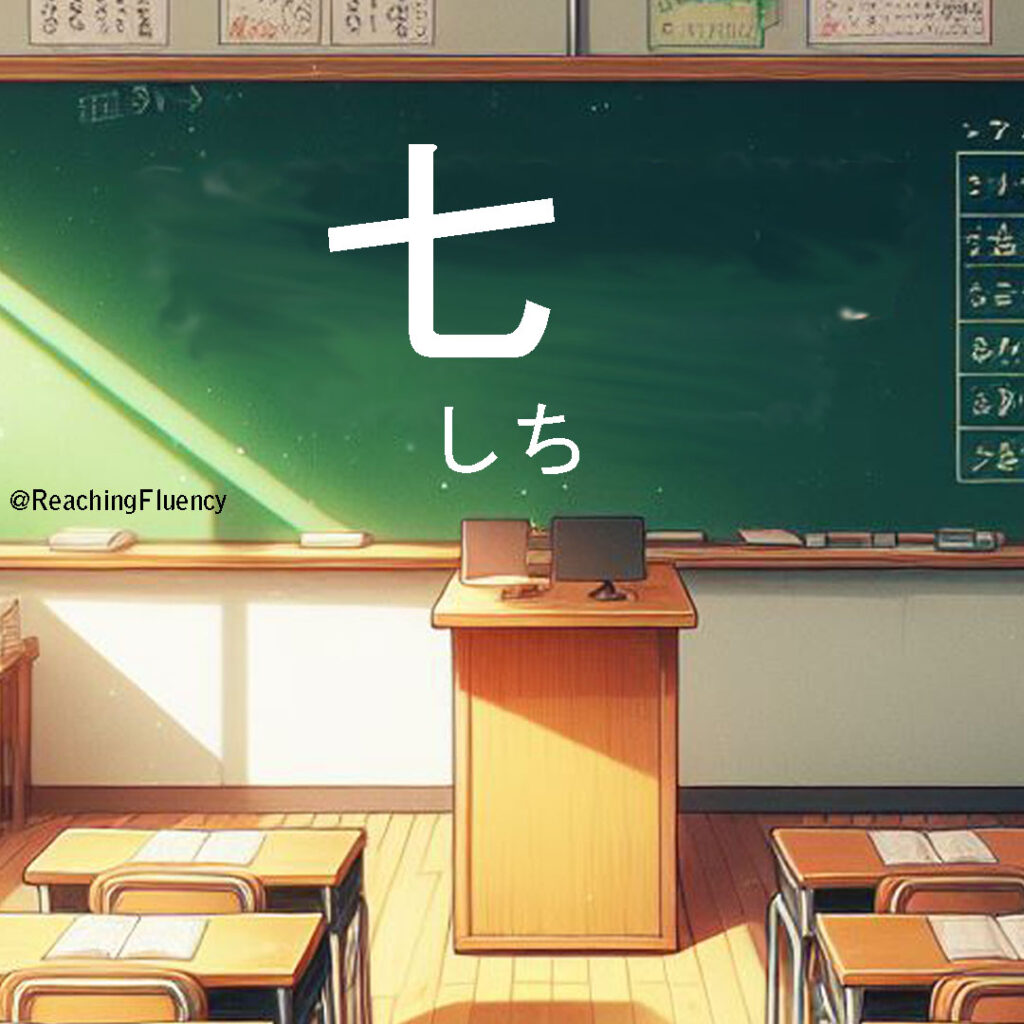
七 (しち, なな, な) – Seven
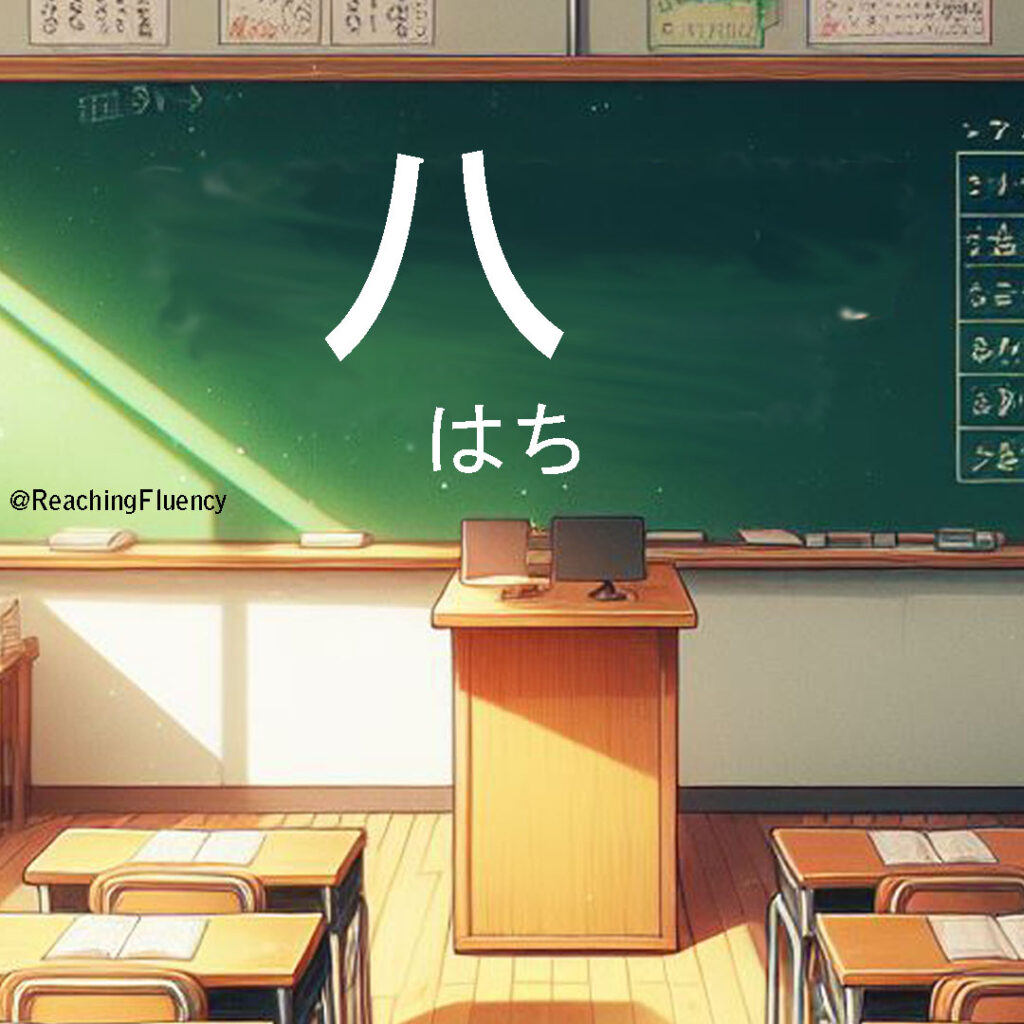
八 (はち) – Eight
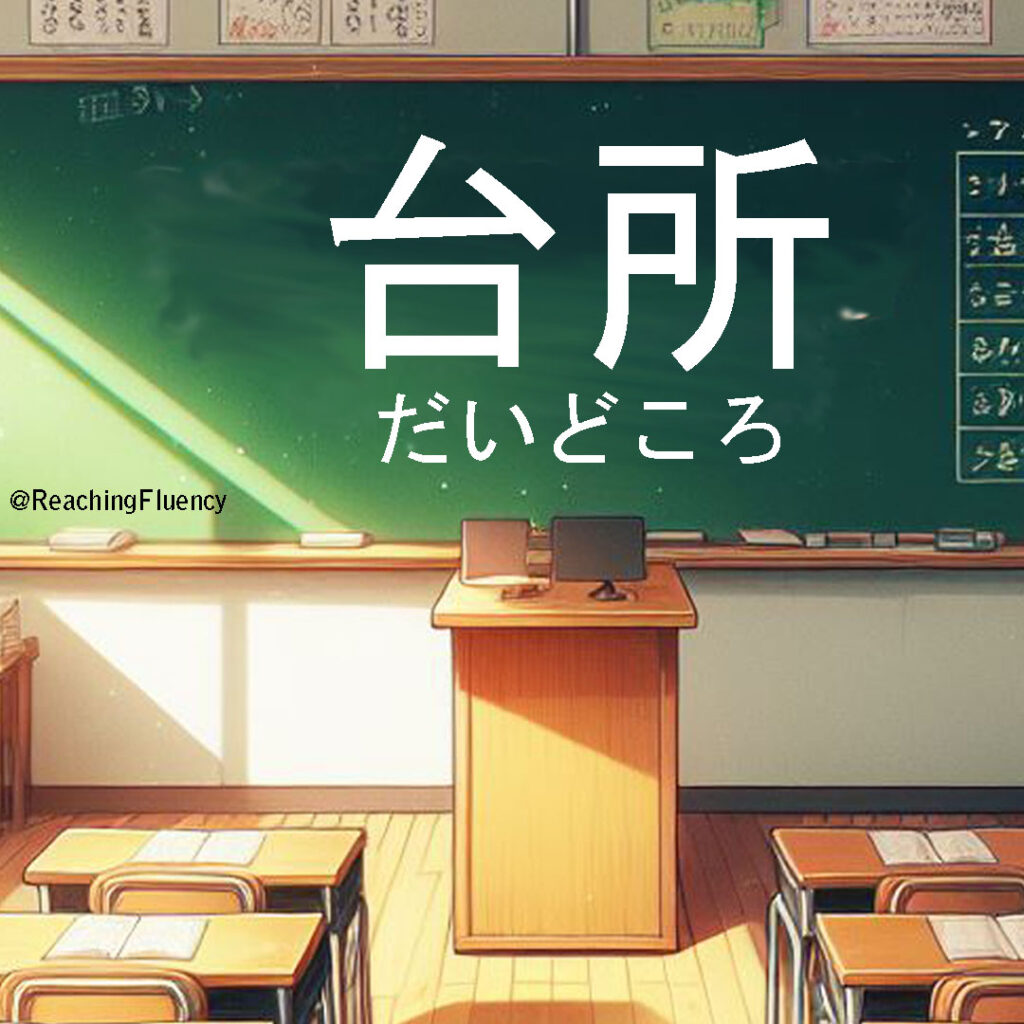
台所 (だいどころ) – Kitchen
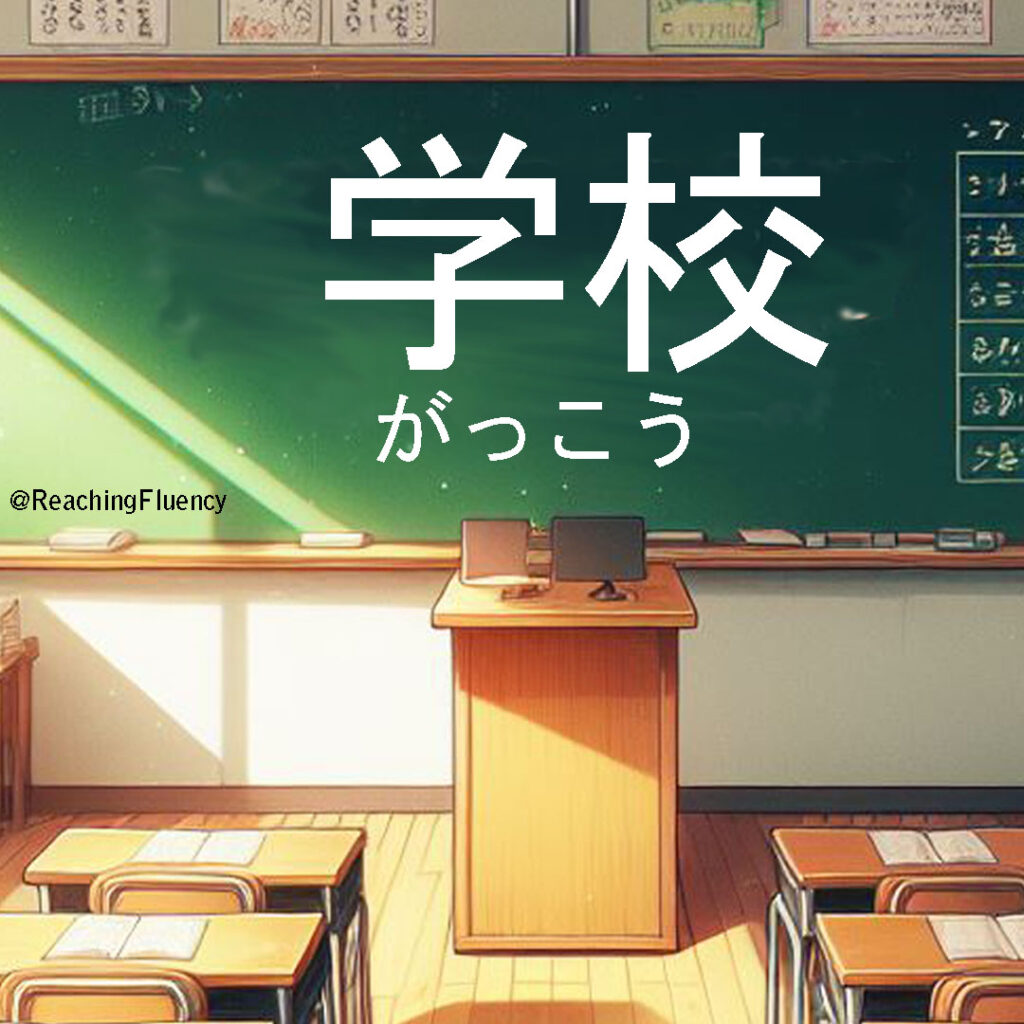
学校 (がっこう) – School
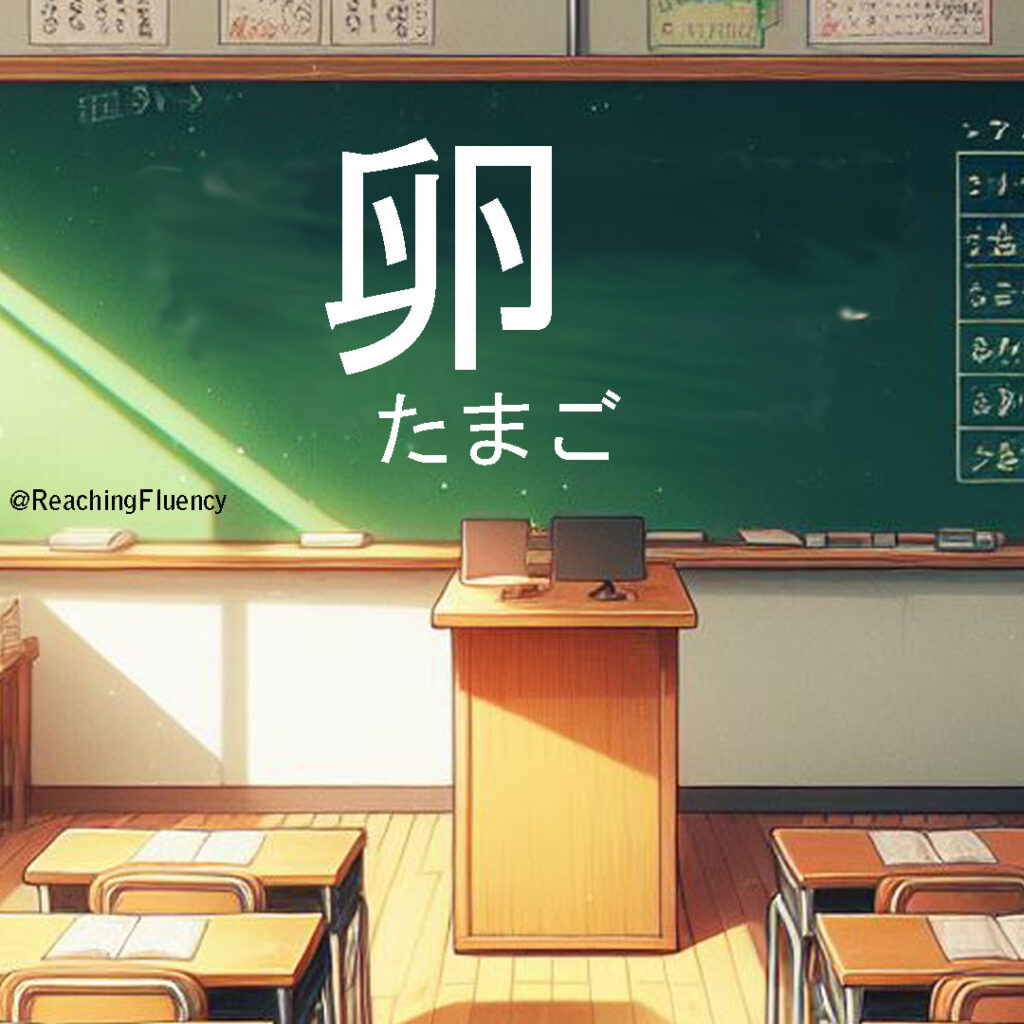
卵 (たまご) – Egg
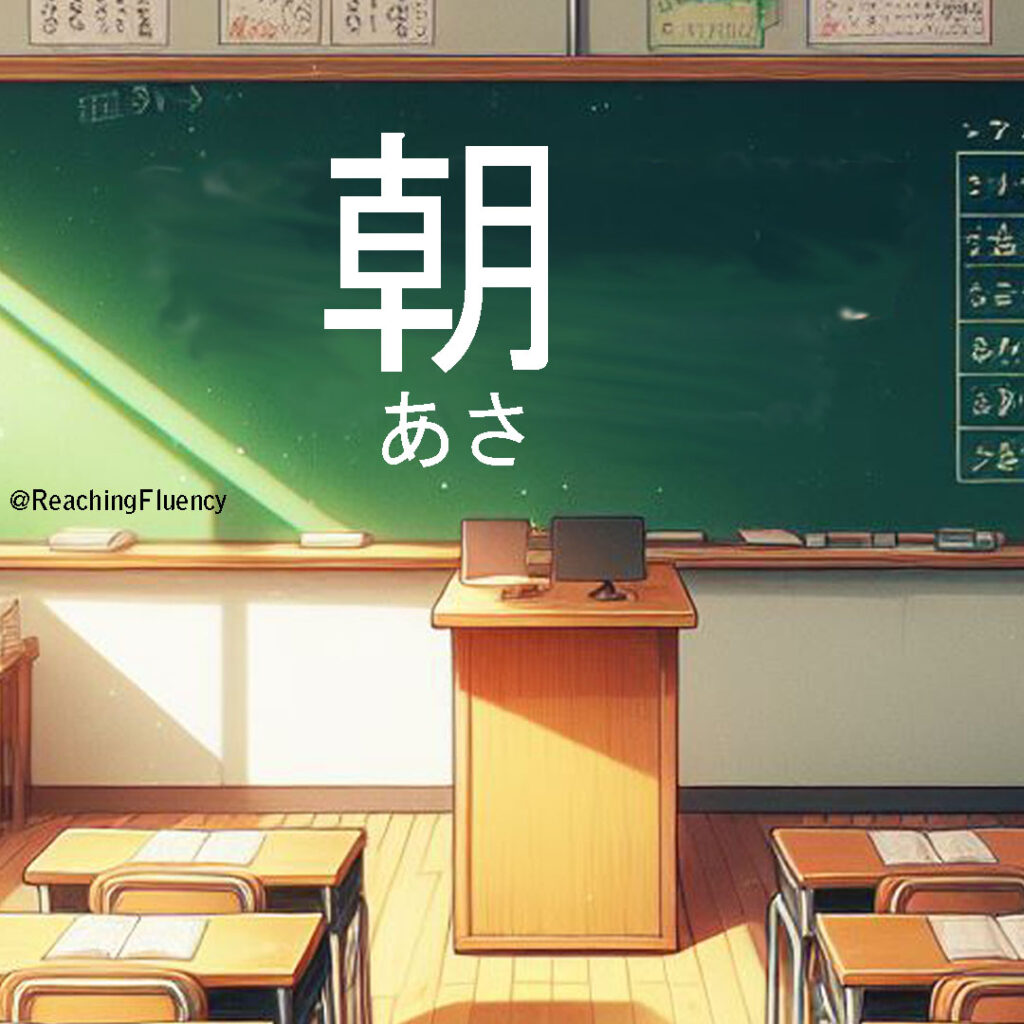
朝 (あさ) – Morning
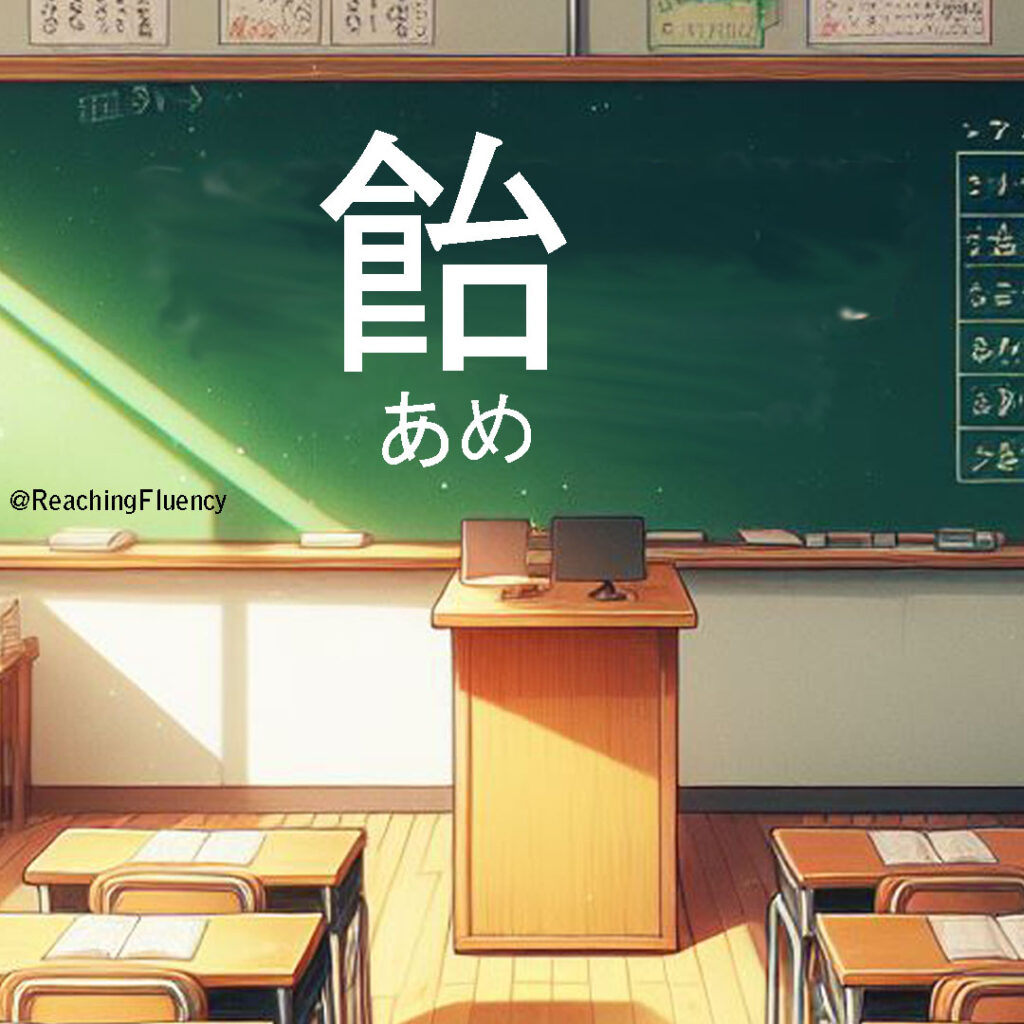
飴 (あめ) – Candy
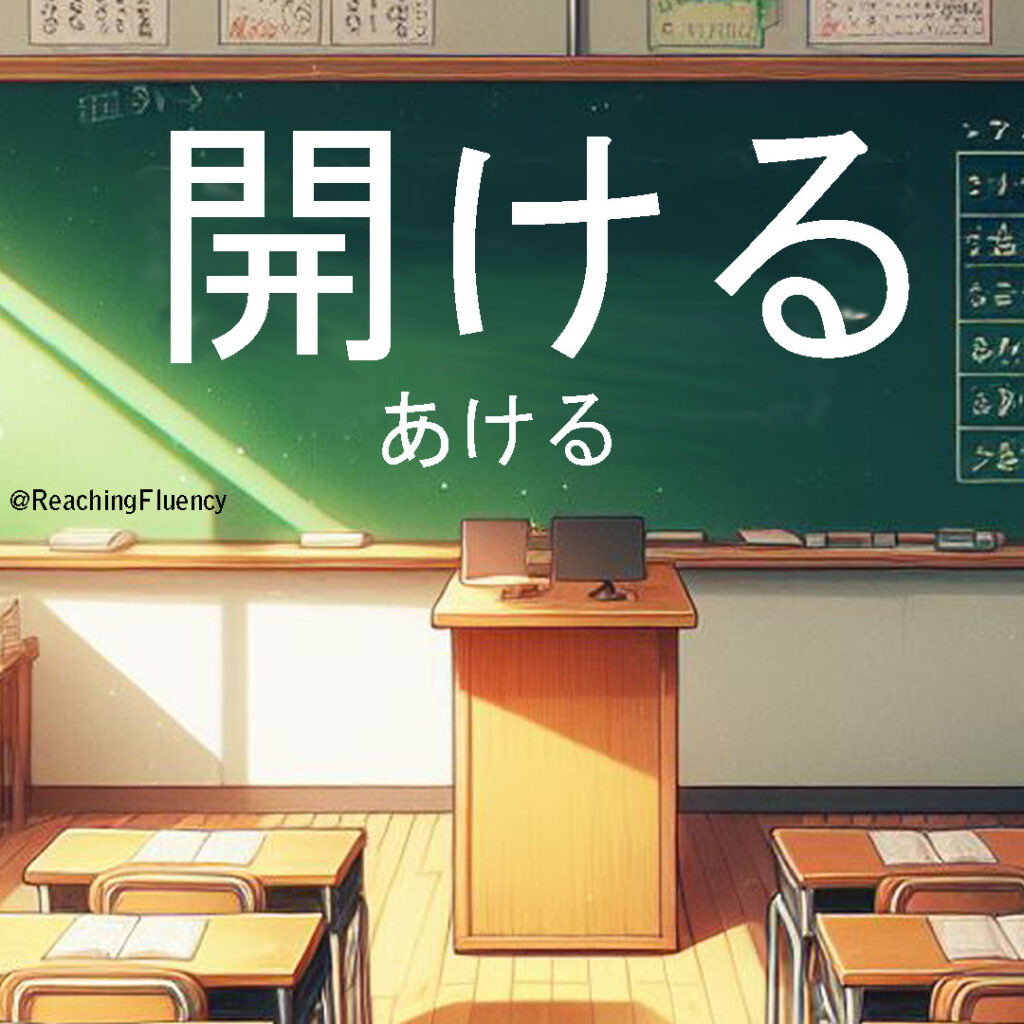
開ける (あける) – To Open
Today’s Immersion Videos
It is taking me time to find/add more immersion videos. This section will be updated shortly!
Go To The Next Lesson: Day 16 – The て (Te) Form

Ian is the owner and main writer of Reaching Fluency. He is a native English speaker, French speaker and Japanese learner and general lover of language learning.
You can read more about him on his Authors Page or link with him on social media
日常英会話メール
ニュースレターを購読してください! - 参加無料
メールリストに参加すると、少なくとも週に 1 回 (場合によってはそれ以上) メールが届きます
メールは毎日の英会話で、読んで勉強することができます。
メールは短いですが役に立ちます。いつでも停止できます


Pingback: Japanese Day 14 - Like And Dislike - Reaching Fluency