
Listening in a new language can be difficult at first and this is made worse by not really knowing how you should approach it.
I will try and explain here how I like to practice my listening to give you some guidance of what you should be doing.
You need to remember that you will improve and how you practice will change over time, but so long as you keep to the principles I talk about below you should be fine.
The real secret is to just do as much as you can and listen to stuff that you can get a basic grasp of, this will bring you the progress you want.
(You can read more about – How Important Is Listening In Language Learning?)
Page Contents
Listen A Lot
The best way to practice is to simply listen. It really isn’t that complicated. Just find something you find some what interesting and listen to it and similar, lots of times.
One of the common problems with listening is that we do not actually realise how much we need to do. You should be doing 1 hour a day minimum, if not more.
This can seem like a lot, but you need this much exposure. I would aim for 1 hour a day, then slowly try and increase it to about 6. I know that is intense, but if you want to get fluent, listening for 6 hours a day is really going to help you get there. The beautiful thing is that if you did this for 6 months, maybe even a year, you will make phenomenal progress.
The language will be yours and it will have been worth it.
(You can read more about – Listening Resources To Help You Learn A Language)

Make Sure You Actively Listen
It is also important to actually listen. It is very easy to not pay attention, which makes it a waste of time. You can’t passively listen to a language; you need to engage with it.
If you put the effort in, you will be rewarded.
(You can read more about – Common Mistakes People Make When Listening To A New Language)
Avoid Listening Fatigue
It is actually very easy to get distracted when you are listening and you will also suffer fatigue far quicker than you would in your own language.
Your brain will be working much harder to listen compared to your own language, so you will of course get tired faster. You need to pay attention and watch out for this. You can quickly just end up staring at the screen blankly while taking nothing in and not even realise.
I suffer this quite badly and it was even worse at the start. I would maybe last 2 or 3 minutes and realise I was drifting off.
If you are finding this happening you need to break your listening down into small bursts. Try listening for 5 or 10 minutes and then slowly building up for longer and longer.
It is far better to do this than just aimlessly listen for a whole hour. Don’t let fatigue steal your progress.
Start With Simple Audio
What you listen to is really going to affect the quality of your practice, so it is much better to start with something simple.
I would normally say start with something aimed at children, but even this can be too complicated. Most kids are pretty fluent by 5 or 6, so if you want to listen to something for kids, it basically has to be for babies.
You can usually find plenty of material that is aimed at beginners. This is the best stuff to start with, then after a while you can start looking towards material for kids and other simple stuff.
As much as the stuff aimed for natives is going to be way more interesting, it is going to be out of reach for a while, but you will be able to build up to it.
Listen To Audio With Text
Listening to audio that has text is extremely beneficial for you. This can either be audio with a transcript or video with subtitles.
Just remember that the audio and text needs to match up. Don’t think you can listen to French and read the English subtitles. This is not practice. This is reading in English while your brain ignores the French. Don’t waste your time doing this.
You will find that reading the text while listening makes things seem easier. You will understand more and just feel better about the whole experience. The text is a like a crutch, that just gives you a bit of extra support. If the language is fast, or you didn’t quite catch a word, it’s right there for you to read.
You will be surprised how much of a difference this can really can make. Hearing and seeing the language combined is just really helpful and you fill find this form of practice extremely productive.
Repeat What You Listen To
Repeating things you have already listened to is a great form of practice that a lot of people miss out on.
Once you have listened to something, don’t be scared to listen to it a number of times. You can repeat it right away or wait a few days, it doesn’t really matter and probably both techniques are equally as good.
You will be surprised how much you more you pick up the second time around and you will also find you understand more in general. It makes sense, the first time round you are sort of building up a vague picture of what is going on, the second time you listen to it you already have some context, meaning you can start to grasp more.
Repeating things can get a little boring, but it is helpful and if you space the listening out over a few days you will have forgotten a lot of it, so it can still feel quite novel.
Increase Your Comprehension Levels
Increasing your comprehension is something you can do away from listening, but it will directly increase your listening skills.
You can increase your comprehension in two different ways. You can sit and learn words and just generally increase your vocabulary, or you can take note of any words you do not know from the audios you have listened to and then look them up and learn them.
Learning words from audio you have already heard is going to help you if you are also repeating what you are listening to, like I discussed above.
(You can read more about – What Is Comprehensible Input In Language Learning?)
Slow The Audio Down
Slowing the audio down can help in some circumstances. A lot of the time the language is spoken too quickly and you can’t quite catch what is being said. Slowing it down can help you just work out what was said.
However, you will find a lot of the time, slowing it down isn’t helpful, as it just sort of sounds weird, but it is still worth a try if you are really struggling.
You will also find that this is done really well on some learning apps, especially Duoliongo. You can slow the speech down, but it is not the same audio just slowed. As it is computer generated they can create it again at a slower, more clear speed with slightly longer spaces in between words. This sounds much better than just slowing the original audio down.
(You can read more about – Frequently Asked Questions About – Listening In A Language You Are Learning)
Practice Transcribing What You Hear
Transcribing is a great way to practice your listening, as well as your writing. This is where you listen to something and then write down exactly what you hear. It sounds pretty straight forward, but you will be surprised how difficult it is.
This is really going to get your listening muscles moving and you will find that the more you do this, the better you get overall at listening.
It’s tough, but it’s worth it. Just make sure the audio has a transcript so you can check how you did.
(You can read more about – How To Develop Your Listening Skills Through Transcription)
Background Music
I am a strong believer that passive listening is a waste of time, but I do think having some background music can help. I’m not saying you will learn anything, but I do feel like it can get you used to the sounds of the language.
I do feel like there is a strange phenomenon with music in the background. If I put on the radio and people are talking, my brain just switches it off completely.
However, I have found that when its music I do seem to pay more attention, I guess the rhythm of the music draws me in.
This might only be me, but it’s worth trying yourself. I would also love for someone to a scientific study on this and see if it has any benefit.
It probably doesn’t, but I still like it. I know passively listening to a language to try and learn it doesn’t work, but music is fun and you will be listening it anyway, so why not have it in your target language.
(You can read more about – Is Passive Language Listening Helpful?)
Conclusion
Hopefully now you have a clearer idea of how you can practice your listening.
Although there are a number of ways you can do it, really you just need to do some form of listening. As long as you can roughly understand what is going on it will be helpful. You brain is going to absorbing everything and slowly decoding it, so just keep giving yourself more and more so you can start to really make sense of the language.
Listening a lot will significantly help with your progress, so make sure you keep practicing, you will see the results you want!
(You can read more about – Should You Focus On Listening When Learning A New Language)
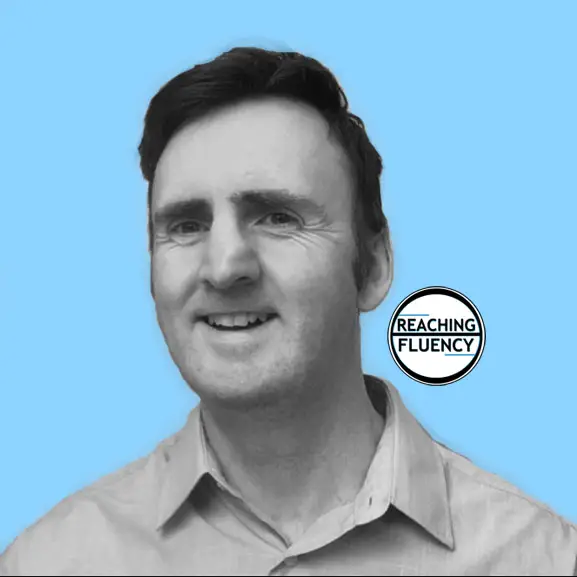
Ian is the owner and main writer of Reaching Fluency. He is a native English speaker, French speaker and Japanese learner and general lover of language learning.
You can read more about him on his Authors Page or link with him on social media
日常英会話メール
ニュースレターを購読してください! - 参加無料
メールリストに参加すると、少なくとも週に 1 回 (場合によってはそれ以上) メールが届きます
メールは毎日の英会話で、読んで勉強することができます。
メールは短いですが役に立ちます。いつでも停止できます


Pingback: How Important Is Listening In Language Learning? – Reaching Fluency