Everyone wants to learn a language as fast as possible. I would strongly urge you to try and understand that it will take a lot of time and commitment, but you can speed things up.
How quickly you can do it will depend on a number of factors, but by being efficient, focused and structured you can learn a language faster than most people.
The following tips will help you achieve this, but still be prepared for a long hard road of learning ahead of you.
(Before you learn how in this article, you can read if it is possible – How Quickly Can You Learn A Language?)
Page Contents
Make A Plan To Learn A Language
If you want to get somewhere, you need to know where you are going. Learning a language is no different.
You need a solid, realistic plan in place before you start or you are not going to get anywhere. This is even truer if you are looking to do it quickly.
The issue is making the plan realistic. I could easily make you a plan that will make you study for 20 hours a day. However, this isn’t going to be productive for most people. This level of study is just not sustainable and your brain will just not be able to keep absorbing and retaining information for this long every day.
Your plan may need adjusting and fine tuning so you find the optimum level of learning that you can consistently handle, without burning out.
Keep your plan realistic and you will be hitting your targets in no time.

Put More Time Into The Language
If you want to do things quickly, you just need to put more time in. This sounds kind of ridiculous, but it makes a lot of sense.
If you look at how we learn languages, they generally are acquired after we spend a certain amount of time with them. After a while we just start getting comfortable with the new language and we can use that to our advantage. For example, As English speakers, we can usually pick up French after about 600 hours of study. While this will never be precise, we can use it as a rough guide.
How we go about reaching that 600 hour mark will really make a difference in how quickly we can learn a language. If you spend 5 hours a day studying, you will get you there a lot faster than someone who only spends 5 minutes a day.
Really the secret to learning a language quickly is to just put more time in. Of course there is always going to be limiting factors, you will get tired and your brain will stop taking information in after a while, but you can probably push yourself more than you realise.
You should certainly be doing more than these language apps suggest, 5 minutes a day is great, but it’s certainly not enough. If you can put more time in, you will see results faster.
Moving To The Country That Speaks the Language Will Speed Up your Learning
You can see that this theory of putting more time in actually works when you look at people who move to a different country and are forced to learn the language. They are surrounded by the language their whole waking day and they will usually reach a good level fairly fast.
They can’t escape and this forces them to spend a lot of time with the language. If you move to France and hear French for 10 hours a day, you are going to reach that 600 hours a lot quicker than someone sat doing 1 DuoLingo lesson a day.
You need to start speaking French, or you will struggle to survive, it’s drastic, but it works.
Spread Your Language Learning Out
If you want to put more time in, spread your learning out throughout your day.
For example, you may find it difficult to study for a solid hour every day, so this can be made easier by breaking your study time down into smaller chunks. You can probably find 20 minutes here and there throughout the day and then you can do a little study in this time.
You will usually find that you will end up doing more than the planned hour, it will be easy to squeeze in four 20 minute session and at the end of the day will have done 1 hour 20 minutes.
Just keep chipping away at your studies through the day and it will all add up.
Use Language Immersion To Learn Quickly
If moving to another country is a little drastic, you can try and replicate this at home through immersion.
Immersion is easily one of the best ways to learn a language quickly and just involves listening and reading to a lot of material in your new language.
People usually make a lot of progress doing this as they are basically putting in the hours. If you have looked into learning Japanese you will have probably come across the AJATT method, which stands for “All Japanese, All The Time” …so immersion.
The people who recommend this basically spend all day just watching stuff in Japanese. Some of them take it really seriously and manage to basically spend all day surrounded by Japanese. This is pretty impressive and they do make a lot of fast progress in the language.
For an English speaker to learn Japanese, they need to study for about 2200 hours, so it’s a long, long time, but if you are spending, 8 hours a day with the language they can start getting pretty close to that target time in a very short amount of time.
Basically the more you can immerse in any language, the quicker you will start to see results.
(You can learn more about – What Is Learning A Language By Immersion?)
Study What You Need From The Language
A smart way to study is to think about what you actually need to know and what you actually want to know and only studying these areas. This will really speed things up.
Some aspects of a language you just need to learn, like basic grammar structures and all the boring, but highly essential things like pronouns. They are simply essential.
As for the rest of the language, you should focus on things you would actually use in daily conversations.
When you follow set courses they can often try and teach you stuff that is kind of irrelevant. For example there may be module on the zoo and zoo animals, which is great, but I honestly can’t remember the last time I talked about zoo animals in real life, in my own language, let alone in a second language!
If I wanted to learn a language quickly, this would be the bottom of my list of things to study. In fact it might not even make it to the list.
I would be smart and start learning the words for topics I want to talk about.
You can also do the same for some essential aspects too. For example, verbs are important, but why not just focus on the verbs you are actually going to use. We all seem to learn the verb “to dance” early on in most language courses. Why? When do you ever talk about dancing in real life?
(If you like talking about zoo animals and dancing, then that’s cool, defiantly focus on these words first)
Focus on what you need and then you can come back later on and focus on the other random topics at a later date. It’s still good to know these words so that you have a board grasp of the language, but they can wait.
Practice Speaking Your Language Often
Practicing your speaking doesn’t sound like it would help speed things up, but it will.
Taking the time to speak forces you to recall words and think about forming the language yourself. This is actually difficult and will really get your brain thinking. You will be slow at first and it will be real struggle, but the more you practice, the faster you will get at recalling the language.
You will start to get comfortable with creating the language and this also make you more comfortable with recognising it too. Basically the more you practice, the faster you will get. You will of course only be practicing what you know, but this is extremely important.
You will be building your foundation of knowledge and strengthening it every time you practice which will make you quicker and more proficient at what you do know. This will then of course make you feel comfortable and you will find it easier to advance and start increasing your knowledge in other areas.
Practicing often can really make the difference in your rate of progress. It really should not be underestimated.
(You can read more about – How To Practice Speaking A Foreign Language)
Get Confidence To Go Faster
Having confidence is going to help you massively to learn quickly.
This isn’t just confidence to do well and learn quickly. This is also to have the confidence to not worry about making mistakes.
Having ‘no fear to fail’ is one of the best mindsets you can have when learning a language.
Being scared to make a mistake is often one of the biggest road blocks in a person’s learning journey.
Scared people will put off speaking with natives. This is too far out of their comfort zone and the fear of sounding stupid paralyses them.
If you can overcome this, you will improve drastically. Mistakes are inevitable. The sooner you realise this, the sooner you just get on with trying to speak and trying to learn from the mistakes that you will make.
No one likes making mistakes, but they are some of the best learning experiences we will get.
Embrace this and you can only get better and speed up your learning.
Conclusion
Learning a language with these tips should keep you heading to your goal at a far quicker pace than if you where to try and learn a language in a more traditional way.
Language learning is still going to take a long time and a lot of effort. You cannot master a language quickly, but you can become proficient relatively fast, so good luck and don’t get stressed if it takes a little longer than you think it will, that’s totally normal.
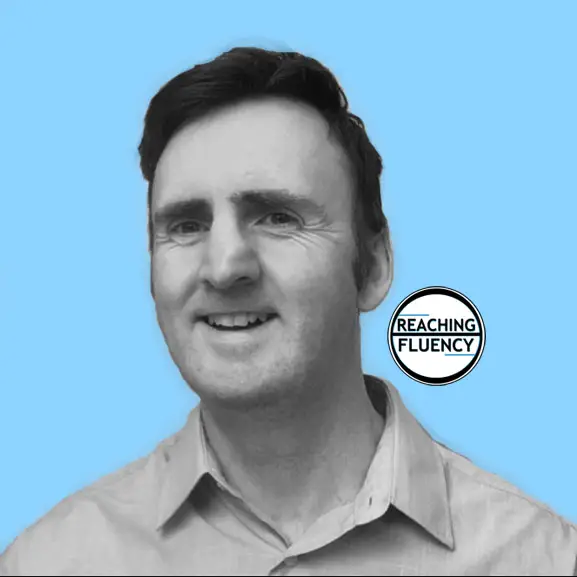
Ian is the owner and main writer of Reaching Fluency. He is a native English speaker, French speaker and Japanese learner and general lover of language learning.
You can read more about him on his Authors Page or link with him on social media
日常英会話メール
ニュースレターを購読してください! - 参加無料
メールリストに参加すると、少なくとも週に 1 回 (場合によってはそれ以上) メールが届きます
メールは毎日の英会話で、読んで勉強することができます。
メールは短いですが役に立ちます。いつでも停止できます